How Does Thermostatic Shower Equipment Improve Shower Comfort and Safety?
Article Summary: A modern shower should provide more than attractive hardware and strong water flow. It should also deliver stable temperature, predictable operation, convenient control, and dependable long-term performance. Thermostatic Shower Equipment addresses common problems such as sudden temperature changes, uncomfortable water fluctuations, complicated manual adjustment, and scalding risks by continuously regulating the balance between hot and cold water. This article explains how thermostatic shower systems work, what components matter, how to choose the right configuration, and how to avoid common installation and maintenance problems. It also examines the practical advantages for residential bathrooms, hotels, apartments, commercial projects, and bathroom renovation programs.
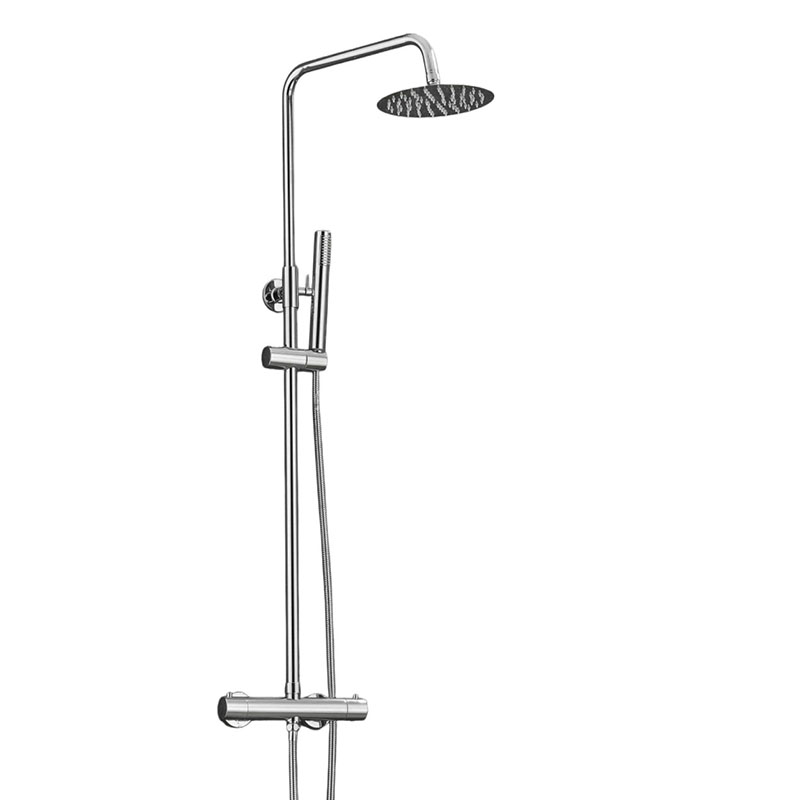
Table of Contents
- Article Outline
- What Is Thermostatic Shower Equipment?
- How Does Thermostatic Shower Equipment Work?
- What Shower Problems Can It Solve?
- What Are the Main Advantages?
- What Components Make Up a Thermostatic Shower System?
- How Do Concealed and Exposed Systems Differ?
- How Can You Choose the Right Equipment?
- What Should Be Considered During Installation?
- How Can You Maintain Long-Term Performance?
- Where Is Thermostatic Shower Equipment Used?
- Why Consider Wenzhou BOYU Sanitary Ware Co., Ltd.?
- Frequently Asked Questions
- Conclusion
Article Outline
- Understand the operating principle of thermostatic shower equipment.
- Identify common temperature-control and safety problems in conventional showers.
- Compare the advantages of thermostatic systems for different bathroom applications.
- Review important system components and installation configurations.
- Learn how to select equipment according to project requirements.
- Follow practical maintenance recommendations for reliable operation.
- Evaluate the role of an experienced sanitary ware manufacturer when sourcing shower systems.
What Is Thermostatic Shower Equipment?
Thermostatic Shower Equipment is a shower solution designed to maintain a relatively consistent water temperature while allowing the user to select a preferred setting. The core of the system is a thermostatic mixing valve. Instead of requiring the user to repeatedly adjust separate hot and cold water controls, the valve automatically responds to changes in the incoming water conditions.
This distinction becomes particularly important in bathrooms where water pressure can change unexpectedly. For example, another person may open a faucet, flush a toilet, or use a washing machine while someone is showering. With a conventional manual mixer, these changes can affect the hot-to-cold water ratio and produce an uncomfortable temperature swing. A thermostatic system is designed to compensate for these variations.
For homeowners, the result is a more predictable shower. For hotels, apartments, resorts, and commercial properties, consistent operation can also reduce complaints and improve the overall user experience.
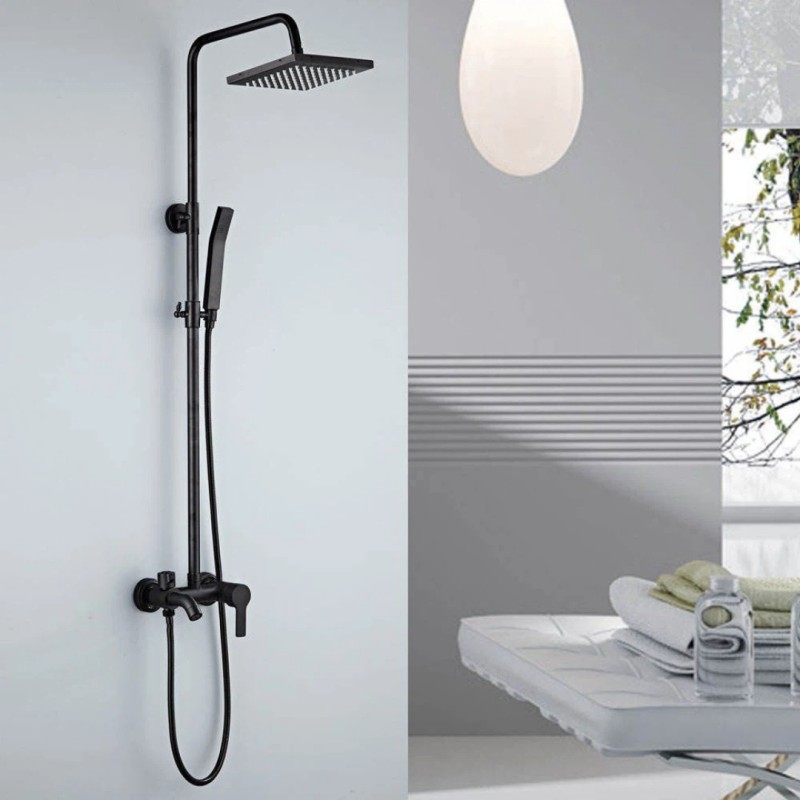
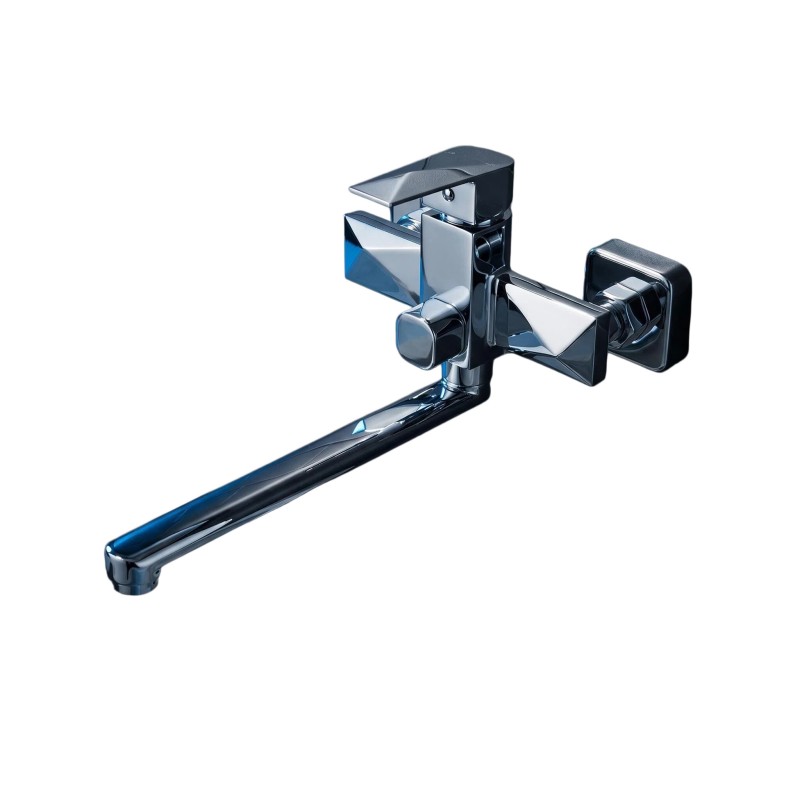
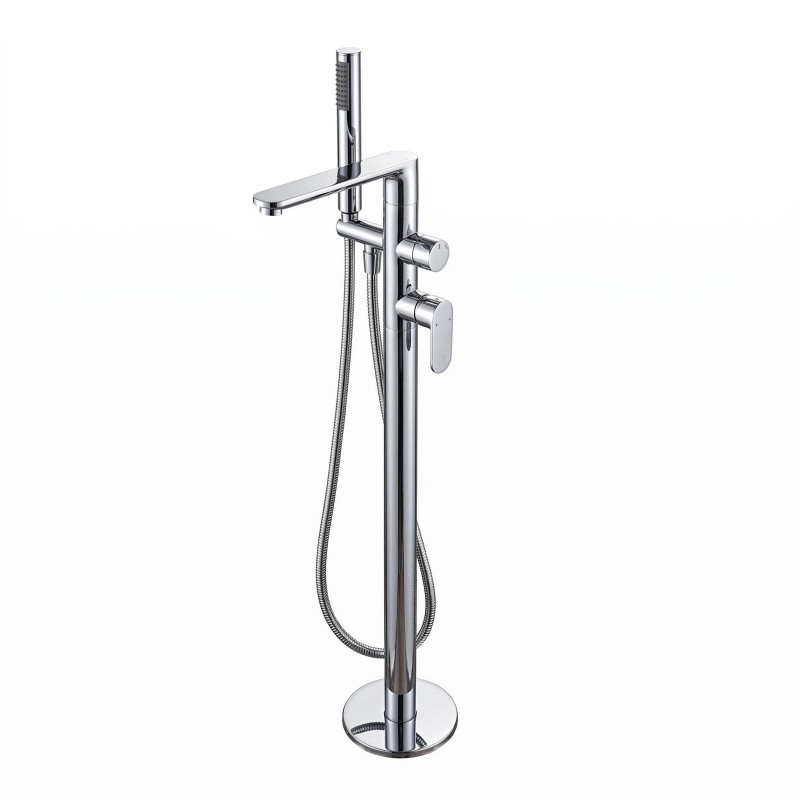
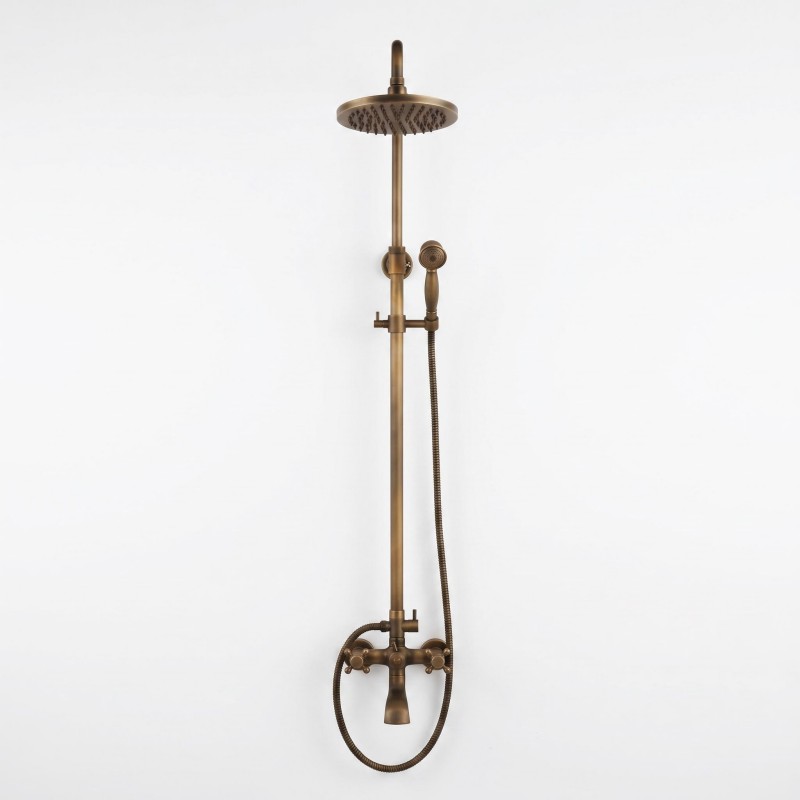
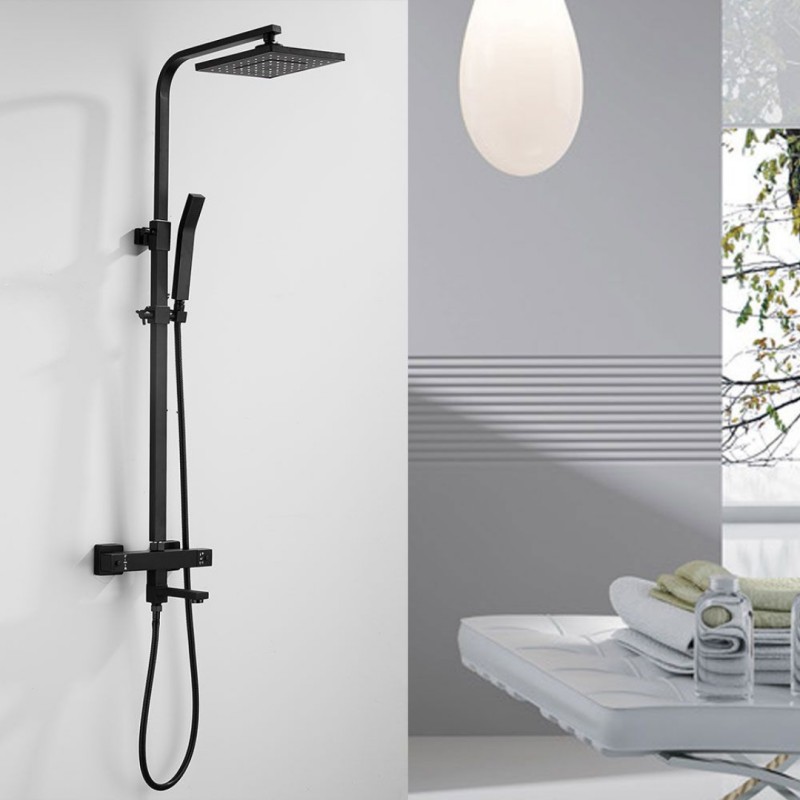
A complete system may combine a thermostatic valve with an overhead shower, handheld shower, diverter, hose, bracket, shower column, and optional bathtub outlet. The exact configuration depends on the bathroom layout and intended application.
How Does Thermostatic Shower Equipment Work?
The operating principle is straightforward, but the engineering behind reliable temperature control requires accurate components and proper installation.
Hot and cold water enter the thermostatic valve through separate inlets. Inside the valve, a temperature-sensitive regulating element continuously monitors the mixed-water temperature. If the temperature begins to move away from the selected setting, the valve adjusts the proportion of hot and cold water.
For example, if the incoming cold-water pressure suddenly decreases, more cold water may no longer reach the mixing chamber at the previous rate. The thermostatic mechanism responds by modifying the hot-water flow so that the outlet temperature remains closer to the selected setting.
The same principle works in the opposite direction. If the hot-water supply changes, the valve compensates by modifying the water mixture.
This automatic adjustment is one of the most important differences between thermostatic and conventional manual shower equipment.
| Feature | Manual Shower Mixer | Thermostatic Shower Equipment |
|---|---|---|
| Temperature adjustment | Manual | Automatically regulated |
| Response to pressure changes | Depends heavily on user adjustment | Valve compensates for changing conditions |
| Temperature consistency | Can fluctuate | Designed for stable output |
| Scald protection | Depends on the mixer design | Can include a dedicated temperature safety stop |
| User convenience | Requires repeated adjustment when conditions change | Preset temperature can be maintained more easily |
What Shower Problems Can It Solve?
Many shower complaints are not caused by the showerhead itself. They originate from unstable water supply conditions, poor temperature control, inconvenient operation, or unsuitable system design.
1. Sudden Temperature Fluctuations
One of the most frustrating shower problems occurs when water suddenly becomes too hot or too cold. This can happen when another water outlet is used elsewhere in the building. A properly selected thermostatic valve helps compensate for these changes.
2. Difficult Temperature Adjustment
With some manual systems, users must repeatedly move a control until the desired temperature is reached. Thermostatic equipment makes the process more predictable because the desired temperature can be selected and maintained by the regulating mechanism.
3. Scalding Risk
Unexpectedly hot water can be particularly concerning in family bathrooms, hotels, healthcare-related environments, and facilities used by children or elderly people. A thermostatic system can incorporate a temperature safety stop that limits accidental adjustment toward excessively hot settings.
4. Poor User Experience in Hospitality
Hotels and resorts serve users with different expectations and levels of familiarity with bathroom fixtures. A clearly designed thermostatic control system can make the shower easier to understand and operate, reducing the learning curve for guests.
5. Inconsistent Performance Across Multiple Bathrooms
For property developers and project contractors, selecting a standardized shower system can simplify procurement and installation. A consistent equipment platform can also make future maintenance and replacement easier.
What Are the Main Advantages?
Choosing Thermostatic Shower Equipment is not simply about adding another bathroom accessory. The system can influence comfort, safety, maintenance requirements, and the perceived quality of the entire bathroom.
- Stable temperature control: The thermostatic valve continuously adjusts the hot and cold water mixture.
- Improved safety: A suitable temperature-limiting mechanism can help reduce the risk of accidental scalding.
- Better comfort: Users can enjoy a more consistent shower temperature instead of constantly correcting the water.
- Convenient operation: Dedicated controls can separate temperature adjustment from water-function selection.
- Flexible shower functions: Systems can support combinations of overhead and handheld shower outlets.
- Project versatility: Different configurations can serve residential, hospitality, renovation, and commercial applications.
- Long-term value: Quality valves and durable metal components can provide reliable service when correctly installed and maintained.
What Components Make Up a Thermostatic Shower System?
A reliable shower system should be treated as an integrated assembly rather than a collection of unrelated parts. Compatibility between the valve, outlets, controls, and water supply is essential.
| Component | Primary Function | Important Consideration |
|---|---|---|
| Thermostatic mixing valve | Controls the hot and cold water mixture | Temperature accuracy and valve quality |
| Overhead shower | Provides the main shower stream | Spray pattern, size, flow, and cleaning convenience |
| Hand shower | Provides flexible directional washing | Ergonomics, hose length, and holder position |
| Diverter | Changes between water outlets | Simple operation and reliable sealing |
| Shower hose | Connects the handheld shower | Flexibility and corrosion resistance |
| Shower column or rail | Supports shower components | Structural stability and installation compatibility |
| Bathtub outlet | Provides water delivery to a bathtub | Suitable flow capacity and installation position |
When purchasing a complete system, buyers should confirm that the components are designed to work together. Mixing parts from incompatible systems may create problems with connections, flow distribution, valve operation, or maintenance.
How Do Concealed and Exposed Systems Differ?
Thermostatic shower systems are commonly available in concealed and exposed configurations. Neither option is universally better. The right choice depends on the building condition, design objective, installation stage, and maintenance strategy.
Concealed Thermostatic Shower Systems
In a concealed configuration, major functional components are installed inside the wall. Only the necessary controls and outlets remain visible.
This approach creates a clean, minimalist appearance and is particularly suitable for new construction or major bathroom renovations where the wall structure can accommodate concealed plumbing.
- Clean and modern visual appearance
- Less visible plumbing hardware
- Suitable for contemporary bathroom designs
- Requires careful planning before wall finishing
- Access and future maintenance should be considered during design
Exposed Thermostatic Shower Systems
An exposed system places the main shower components on the wall surface. This configuration can be especially practical for renovation projects where extensive modification of existing walls is undesirable.
- More straightforward installation in many renovation scenarios
- Visible components are generally easier to inspect
- Convenient for replacement or upgrading existing showers
- Provides a strong functional and industrial-style appearance
Before selecting either configuration, evaluate the existing plumbing, wall structure, available installation depth, access requirements, and overall bathroom design.
How Can You Choose the Right Equipment?
Choosing the right system should begin with project requirements rather than appearance alone. A shower that looks attractive but does not match the water supply or installation conditions may create unnecessary problems after installation.
Consider the following factors:
- Water pressure: Check the available hot- and cold-water pressure before selecting the system.
- Water temperature: Confirm that the hot-water source can provide sufficient temperature and capacity.
- Number of outlets: Decide whether the system needs an overhead shower, handheld shower, bathtub outlet, or multiple functions.
- Installation method: Determine whether concealed or exposed installation is more appropriate.
- Material: Look for durable materials suitable for repeated exposure to water and humidity.
- Surface finish: Consider corrosion resistance, cleaning requirements, and the bathroom's design language.
- Safety: Check whether the system provides an appropriate temperature-limiting function.
- Maintenance: Make sure replacement parts and service support can be obtained when necessary.
- Project quantity: Large developments may require consistent specifications, packaging, and delivery schedules.
- Customization: For brands and distributors, confirm whether OEM or ODM services are available.
For commercial projects, purchasing teams should also evaluate documentation, quality-control procedures, applicable market requirements, packaging, spare parts, and after-sales support.
What Should Be Considered During Installation?
Even a high-quality thermostatic valve cannot compensate for poor installation. Installation accuracy is therefore an important part of system performance.
- Flush the plumbing before connecting sensitive valve components.
- Confirm hot- and cold-water inlet orientation before installation.
- Check pipe connections carefully for leakage.
- Verify that the system is installed according to the manufacturer's instructions.
- Make sure the control handles can be operated comfortably after wall finishing.
- Position the overhead and handheld outlets according to the intended user profile.
- Test the water temperature before the bathroom is handed over.
- Check every outlet independently if the system has multiple functions.
For concealed systems, installation planning is especially important because access becomes more difficult after the wall has been closed and finished. Contractors should confirm valve depth, connection positions, control alignment, and maintenance access before completing the wall surface.
How Can You Maintain Long-Term Performance?
Thermostatic shower equipment is exposed to water, minerals, temperature changes, cleaning chemicals, and repeated mechanical operation. Regular maintenance can help preserve its appearance and functionality.
Clean the showerhead regularly. Mineral deposits can accumulate around spray outlets and affect water distribution. Easy-clean spray nozzles can simplify this task.
Inspect connections. Check visible joints, hoses, and outlets for signs of leakage. A small leak should not be ignored because it can gradually damage surrounding surfaces.
Keep controls clean. Avoid aggressive chemicals that may damage surface finishes. Use cleaning products appropriate for the material and finish.
Monitor temperature performance. If the shower begins to fluctuate significantly, investigate the water supply, valve condition, filter condition, and cartridge performance instead of simply increasing the temperature setting.
Replace worn components when necessary. Seals, cartridges, hoses, and other service parts may eventually require replacement depending on water quality and frequency of use.
Where Is Thermostatic Shower Equipment Used?
The flexibility of thermostatic shower systems makes them suitable for a wide range of projects.
| Application | Primary Requirement | Suitable System Considerations |
|---|---|---|
| Residential bathrooms | Comfort and safety | Simple controls, temperature stability, family-friendly operation |
| Hotels and resorts | Guest satisfaction and durability | Reliable operation, attractive design, standardized specifications |
| Apartment developments | Consistent installation across multiple units | Repeatable configuration, supply reliability, maintenance support |
| Bathroom renovation | Practical installation | Exposed configurations and compatibility with existing plumbing |
| Commercial facilities | Frequent use and easy maintenance | Durable materials, dependable controls, serviceable components |
| Wholesale and distribution | Product consistency and market suitability | Stable quality, packaging, customization, and technical support |
Why Consider Wenzhou BOYU Sanitary Ware Co., Ltd.?
For buyers sourcing Thermostatic Shower Equipment for residential, hospitality, or commercial projects, the manufacturer can be just as important as the product specification. A dependable supplier should understand material selection, precision machining, assembly, testing, customization, and the practical requirements of international customers.
Wenzhou BOYU Sanitary Ware Co., Ltd. focuses on sanitary ware and shower system solutions, including thermostatic shower equipment. Its product range covers different shower configurations designed for residential and project applications.
When evaluating a supplier, buyers should look beyond a product photograph. Important questions include:
- Can the manufacturer provide complete shower system solutions?
- Are core components manufactured with consistent dimensional accuracy?
- Does the supplier perform water-pressure and leakage testing?
- Can the supplier support different installation configurations?
- Are OEM and ODM options available for brands and distributors?
- Can packaging and product details be customized for specific markets?
- Is technical and after-sales support available?
- Can the supplier maintain consistent quality for repeat orders?
These questions are particularly important for importers and project buyers because a shower system is not a one-time visual purchase. It must continue to function reliably after installation, while replacement and maintenance requirements should remain manageable throughout its service life.
For businesses developing a bathroom product portfolio, working directly with an experienced manufacturer can also make it easier to coordinate product specifications, packaging, branding, and project requirements.
Frequently Asked Questions
What is the main purpose of Thermostatic Shower Equipment?
The main purpose is to provide more consistent shower water temperature by automatically regulating the balance between hot and cold water. This reduces the need for constant manual adjustment and can improve shower comfort and safety.
Is a thermostatic shower better than a manual shower?
For users who prioritize temperature stability and convenient operation, a thermostatic system can offer significant advantages. Manual mixers may be simpler in some applications, but they generally require more direct user adjustment when water conditions change.
Can thermostatic shower equipment prevent scalding?
A properly designed thermostatic system can reduce the risk of accidental exposure to excessively hot water through temperature control and a safety stop. However, correct installation, appropriate temperature settings, and regular maintenance remain important.
Can a thermostatic shower work with changing water pressure?
Thermostatic valves are specifically designed to respond to changes in water supply conditions. However, the actual performance depends on the valve design, pressure range, plumbing configuration, and available hot-water supply.
Should I choose a concealed or exposed thermostatic shower?
Choose according to the project. Concealed systems are attractive for new construction and major renovations where the plumbing can be planned inside the wall. Exposed systems are often practical for renovation projects because the main components remain accessible.
What materials are suitable for thermostatic shower systems?
Durable brass and stainless steel are commonly selected for shower components because they can provide structural strength and resistance to the demanding bathroom environment when properly manufactured and finished.
How often should a thermostatic shower system be maintained?
There is no universal maintenance interval because water quality, usage frequency, and local conditions differ. Users should regularly clean shower outlets, inspect visible connections, monitor temperature performance, and address leaks or abnormal operation promptly.
Is thermostatic shower equipment suitable for hotels?
Yes. Temperature stability, user-friendly controls, and consistent specifications make thermostatic shower systems suitable for many hotel and hospitality projects. For large projects, durability, standardized installation, replacement parts, and supplier support should also be considered.
Can a manufacturer customize thermostatic shower equipment?
Customization may include product appearance, branding, packaging, component configuration, and other project-specific requirements. Buyers should discuss drawings, samples, quantities, target markets, and technical specifications with the manufacturer before placing an order.
Conclusion
A shower system should provide reliable performance every time it is used. Thermostatic Shower Equipment improves this experience by automatically managing the hot and cold water mixture, helping users maintain a comfortable temperature even when water supply conditions change.
The best solution, however, is not determined by the thermostatic valve alone. Material quality, valve engineering, component compatibility, installation accuracy, safety features, water pressure, shower configuration, and long-term maintenance all influence the final result.
For homeowners, the priority is often comfort and safety. For hotels and property developers, consistency and durability become equally important. For wholesalers, distributors, and bathroom brands, supplier capability, customization, quality control, and stable production can determine whether a product line succeeds in the market.
By evaluating these factors before purchasing, buyers can avoid common problems such as unstable temperatures, difficult installation, premature leakage, incompatible components, and inadequate after-sales support.
Wenzhou BOYU Sanitary Ware Co., Ltd. provides Thermostatic Shower Equipment and related shower system solutions for customers seeking practical, reliable, and customizable bathroom products. If you are planning a residential development, hotel project, bathroom renovation, distribution program, or customized product line, contact us to discuss your requirements and find a thermostatic shower solution that fits your application.
Related News
- Why Is a 304 Stainless Steel Bathtub Faucet a Smart Choice for Modern Bathrooms
- How Can a Brushed Nickel Recessed Shower Set Transform a Modern Bathroom
- How Can the Right Kitchen Sink Faucet Improve Kitchen Functionality, Durability, and Modern Design
- Why Is a 304 Stainless Steel Kitchen Faucet a Smart Choice for Modern Kitchens
- Why Is a Freestanding Bathtub Faucet the Smart Choice for Modern Luxury Bathrooms
- Why Is an Antique Brass Basin Faucet a Smart Choice for Timeless Bathroom Design
Leave me a message