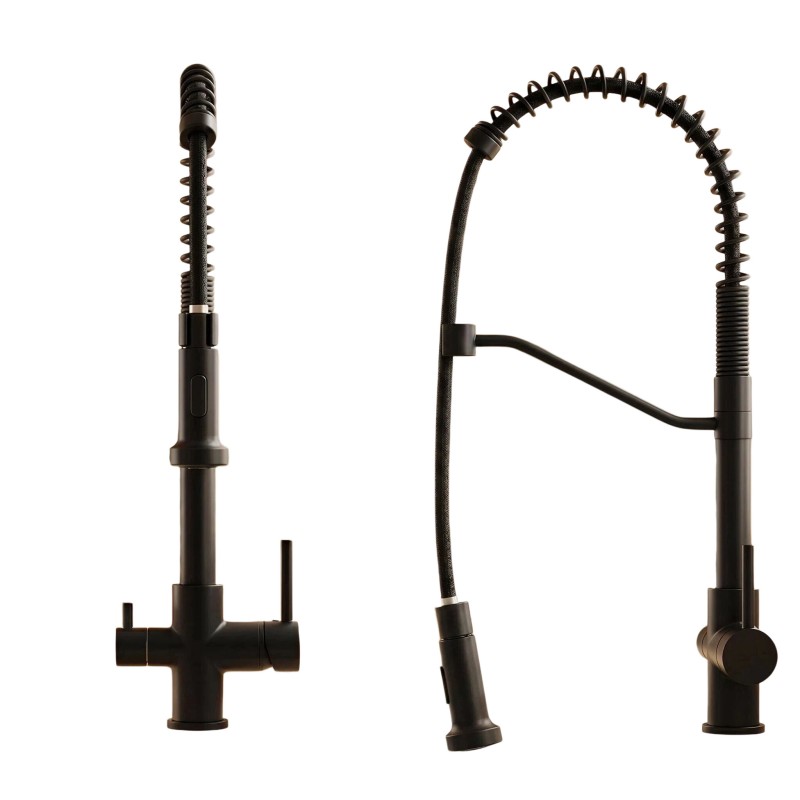
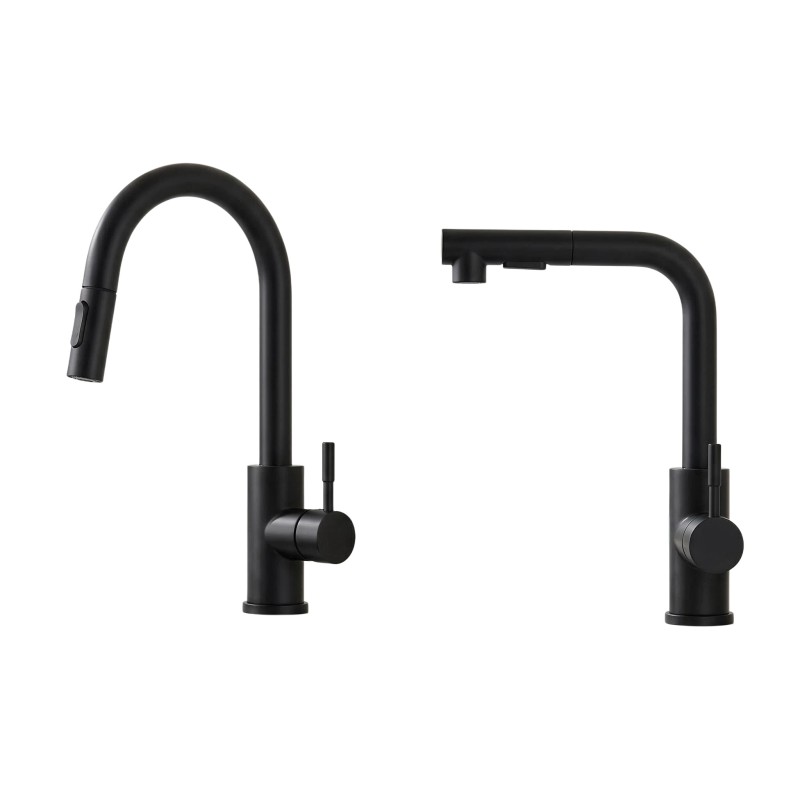
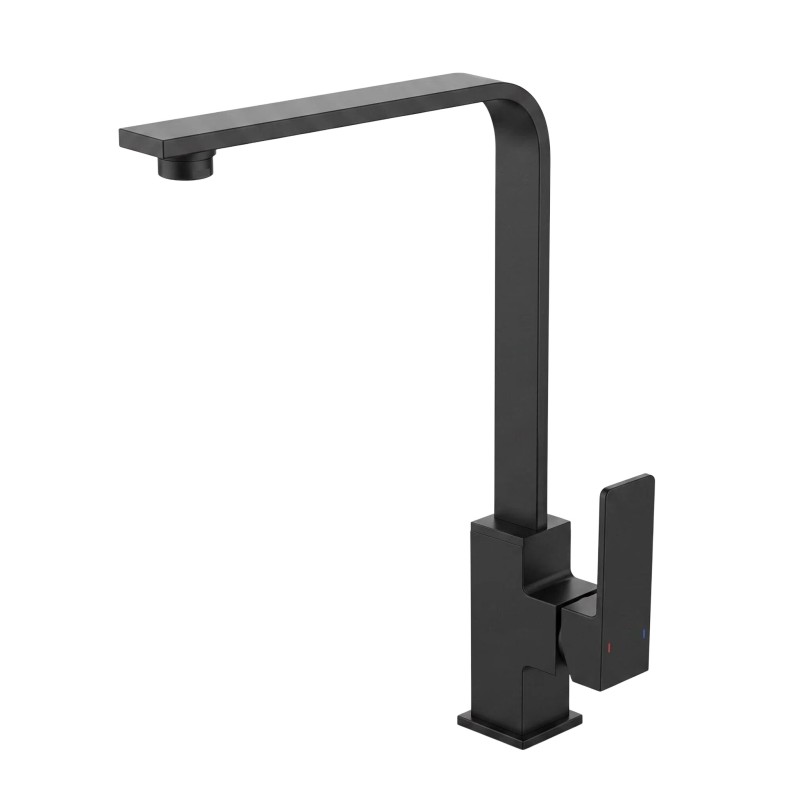
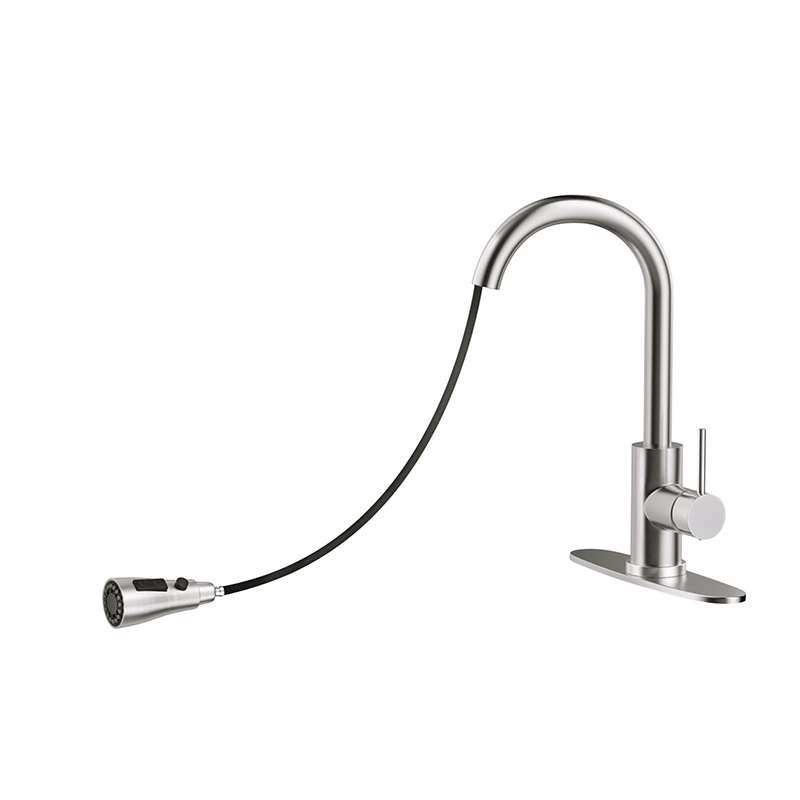
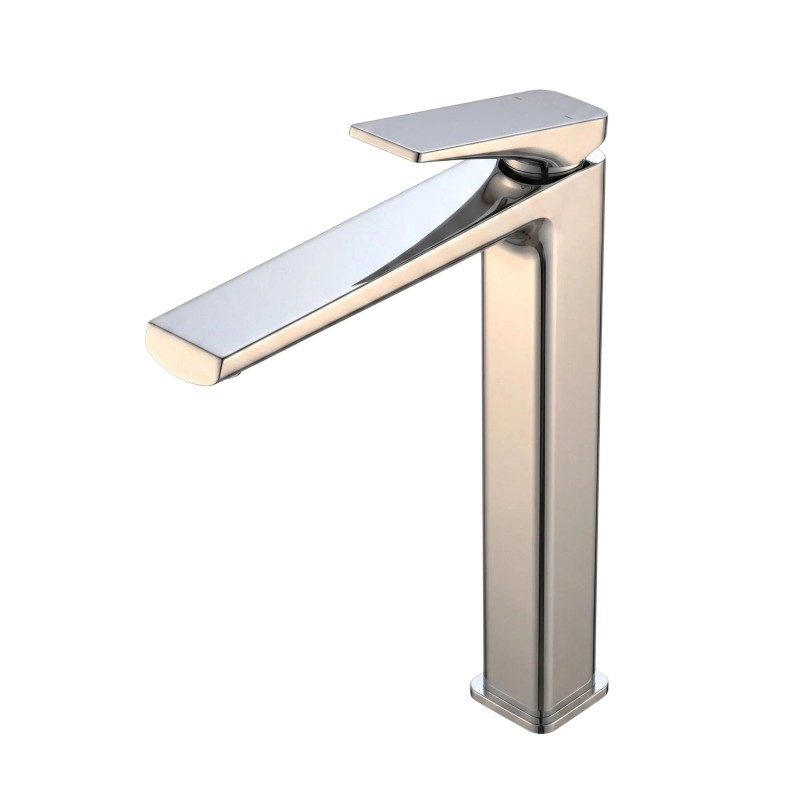
The 304 Stainless Steel Pull-Down Kitchen Faucet is designed around flexible water delivery at the kitchen sink. A pull-down spray head extends from the faucet body, allowing users to direct the water flow closer to cookware, dishes, vegetables, and different areas of the sink.
Compared with a conventional fixed-spout kitchen faucet, the pull-down configuration provides greater control over the position of the water outlet. The spray head can be pulled down during use and returned to the faucet body after cleaning, making the configuration suitable for kitchens where sink coverage and washing convenience are important purchasing considerations.
Manufactured by Wenzhou BOYU Sanitary Ware Co., Ltd. in Wenzhou, Zhejiang, China, this faucet is produced through stainless steel component processing, CNC machining, assembly, water-pressure testing, surface inspection, and final quality control.
Product Specifications
|
Item
|
Specification
|
|
Product Name
|
304 Stainless Steel Pull-Down Kitchen Faucet
|
|
Product Type
|
Pull-Down Kitchen Sink Faucet
|
|
Main Material
|
304 Stainless Steel
|
|
Faucet Configuration
|
Pull-Down Spray Head
|
|
Water Control
|
Single-Handle Configuration*
|
|
Water Outlet
|
Pull-Down Spray Head*
|
|
Spout Movement
|
Swivel Configuration*
|
|
Application
|
Residential and Commercial Kitchens
|
|
Manufacturing Process
|
CNC Machining, Assembly and Quality Inspection
|
|
Pressure Testing
|
Water Pressure and Leakage Testing
|
|
Salt Spray Testing
|
200-Hour Neutral Salt Spray Test*
|
|
OEM / ODM
|
Available
|
*Detailed configuration should be confirmed according to the selected model and final production specification.
Pull-Down Spray Head for Direct Sink Access
The main functional feature of this faucet is the pull-down spray head. Instead of keeping the water outlet at a fixed position above the sink, the spray head can be moved downward toward the working area.
This configuration is useful when washing large cookware, rinsing dishes, cleaning corners of the sink, or directing water toward a specific area. The hose length and extension range should be considered together with sink dimensions when selecting the faucet for a particular installation.
For kitchen projects, the pull-down structure can also reduce the need for users to move large containers repeatedly under a fixed water outlet. The actual operating range depends on the hose design, faucet height, sink configuration, and installation position.
Spray Head Configuration
A pull-down kitchen faucet normally requires the spray head, internal hose, return mechanism, and faucet body to work together. The spray head is therefore not simply an external accessory; its connection and hose movement directly affect daily operation.
|
Component
|
Function and Purchasing Consideration
|
|
Spray Head
|
Directs water toward different areas of the sink and cookware
|
|
Pull-Down Hose
|
Provides extension from the faucet body to the working area
|
|
Hose Connection
|
Requires reliable sealing and smooth movement during repeated use
|
|
Return Mechanism
|
Helps return the spray head to its normal position
|
|
Water Outlet
|
Should provide stable flow under the specified working conditions
|
|
Faucet Body
|
Supports the hose assembly and internal waterway components
|
Spray and Stream Water Modes
For kitchen cleaning applications, switching between different water-flow patterns can make the faucet more practical for different tasks. A concentrated stream can be used for filling containers, while a spray pattern can provide broader coverage for rinsing dishes and cleaning the sink.
The exact spray modes, switching mechanism, flow rate, and outlet design should be confirmed according to the selected faucet configuration. For OEM projects, the spray-head structure can be evaluated according to the target market and intended application.
Procurement Note: When comparing pull-down faucets from different suppliers, do not evaluate the spray head separately. Check the complete assembly, including the hose, connection points, return mechanism, valve, sealing components, and faucet body.
304 Stainless Steel Faucet Body
The faucet uses 304 stainless steel for the main construction. This material is widely used in kitchen hardware because it provides corrosion resistance suitable for normal wet and humid environments.
For a pull-down faucet, material selection needs to be considered together with mechanical construction. The faucet body supports repeated movement of the spray hose and daily operation of the control components, so machining accuracy and component matching are important to long-term operation.
BOYU processes stainless steel faucet components through CNC machining, including operations such as drilling, tapping, deburring, and cleaning. Machined components are subsequently assembled and inspected before finished products are released.
Hose Movement and Faucet Geometry
The usable range of a pull-down faucet depends on more than the length of the internal hose. Faucet height, spout reach, sink depth, mounting position, hose routing, and the return mechanism all affect how far the spray head can be comfortably extended.
For new kitchen projects, buyers should evaluate the faucet together with the sink dimensions. For replacement projects, the existing mounting hole, countertop thickness, under-sink clearance, and water supply connections should be checked before ordering.
|
Installation Factor
|
Why It Matters
|
|
Mounting Hole
|
Must match the faucet base and installation configuration
|
|
Countertop Thickness
|
Affects mounting hardware compatibility
|
|
Sink Depth
|
Influences practical spray-head positioning
|
|
Spout Reach
|
Determines water coverage across the sink
|
|
Faucet Height
|
Must provide sufficient clearance for cookware
|
|
Under-Sink Space
|
Required for hose movement and connection components
|
|
Water Inlet
|
Must match the plumbing connection specification
|
Single-Handle Water Control
The single-handle configuration allows users to control water flow and temperature through one control point. This arrangement is commonly used for kitchen sinks where quick adjustment is required while washing or preparing food.
For OEM projects, buyers should specify the cartridge type, handle position, operating direction, inlet configuration, and applicable certification requirements before production.
The cartridge and sealing components should be evaluated together with the faucet body because smooth handle operation and leakage prevention depend on the compatibility of these internal components.
Internal Components and Sealing
A kitchen faucet may appear simple externally, but its internal assembly contains multiple interfaces where sealing and dimensional accuracy are important. These include the cartridge, water inlet connections, hose connections, seals, and internal water passages.
BOYU's manufacturing process includes precision machining followed by component assembly and functional testing. The objective is to maintain correct component fit and reduce potential leakage points before the finished faucet enters final inspection.
Water Pressure and Leakage Testing
Pull-down faucets contain moving water connections, making leakage control an important part of production inspection. The faucet needs to maintain sealing performance during normal operation and repeated movement of the spray hose.
BOYU's stated testing procedures include airtightness inspection, pressure testing, hot and cold pressure cycling, and evaluation of pressure and flow stability.
-
Airtightness inspection
-
Water-pressure testing
-
Leakage inspection
-
Hot and cold pressure cycling
-
Pressure stability evaluation
-
Flow stability evaluation
Products that fail the applicable inspection requirements are returned for corrective work and reinspection before shipment.
Surface Finish and Salt Spray Testing
Kitchen faucets are repeatedly exposed to water, humidity, detergents, fingerprints, and cleaning agents. Surface treatment therefore needs to provide suitable resistance for the intended application and cleaning environment.
BOYU states that its faucets, shower systems, and bathroom accessories undergo a 200-hour neutral salt spray test. The test provides an accelerated method for evaluating corrosion resistance of the tested surface system.
Actual corrosion performance depends on the stainless steel substrate, surface treatment, environmental conditions, cleaning agents, and applicable testing standard. Buyers requiring a defined salt spray specification should confirm the test method and acceptance criteria for the selected finish.
Manufacturing Process
|
Production Stage
|
Main Control Point
|
|
Raw Material
|
Material grade and component specification
|
|
CNC Machining
|
Dimensions, threads, drilling and machining surfaces
|
|
Deburring
|
Removal of machining burrs and sharp edges
|
|
Cleaning
|
Removal of machining residues
|
|
Surface Treatment
|
Finish consistency and surface condition
|
|
Assembly
|
Component fit, hose routing and sealing
|
|
Water Testing
|
Leakage, pressure and flow performance
|
|
Final Inspection
|
Appearance, operation, dimensions and packaging
|
Quality Inspection for Pull-Down Faucets
The pull-down structure requires attention to both water performance and mechanical movement. Final inspection should therefore cover the spray head, hose movement, return action, handle operation, water flow, connections, and external finish.
|
Inspection Area
|
Inspection Focus
|
|
Spray Head
|
Appearance, outlet condition and switching operation
|
|
Hose
|
Connection, movement and surface condition
|
|
Return Function
|
Correct positioning after the spray head is released
|
|
Handle
|
Operating smoothness and control response
|
|
Water Flow
|
Flow stability and outlet performance
|
|
Sealing
|
Connection and leakage inspection
|
|
Surface
|
Finish consistency and visible defects
|
Installation Considerations
Before installing a pull-down kitchen faucet, the sink and countertop configuration should be checked against the faucet dimensions. The spray head requires sufficient clearance for pulling down and returning to the faucet body.
-
Check the mounting-hole diameter and installation method.
-
Confirm countertop thickness and mounting hardware.
-
Check hot and cold water inlet connections.
-
Allow sufficient space below the countertop for hose movement.
-
Confirm the sink depth and faucet reach.
-
Check clearance around the spray head and surrounding cabinets.
-
Verify the applicable plumbing requirements for the destination market.
Applications
|
Application
|
Typical Requirement
|
|
Residential Kitchens
|
Flexible rinsing and washing around the kitchen sink
|
|
Apartment Projects
|
Standardized kitchen faucet installation
|
|
Kitchen Renovation
|
Replacement of conventional fixed-spout faucets
|
|
Hospitality Projects
|
Kitchen fixtures requiring flexible sink access
|
|
Wholesale Distribution
|
Pull-down faucet product lines for retail and distribution
|
|
Private Label
|
Customized faucet specifications, branding and packaging
|
OEM and ODM Manufacturing
BOYU provides OEM and ODM services for importers, distributors, wholesalers, retailers, kitchen hardware brands, and project customers.
For pull-down kitchen faucet projects, customization can cover the faucet dimensions, spray-head configuration, hose length, handle design, surface finish, inlet connections, packaging, logo, and other product specifications.
-
Faucet body dimensions
-
Spout height and reach
-
Pull-down hose length
-
Spray-head configuration
-
Water-flow modes
-
Handle design
-
Valve cartridge
-
Surface finish
-
Brand logo
-
Packaging and labeling
Customers can provide drawings, samples, reference products, or target specifications for product development and quotation.
Factory Manufacturing Capability
Wenzhou BOYU Sanitary Ware Co., Ltd. operates a manufacturing facility of more than 4,000 square meters in Longwan District, Wenzhou, Zhejiang, China.
The factory integrates product design, R&D, CNC machining, assembly, testing, quality inspection, and finished-goods management. Its reported daily production capacity includes 3,000 faucets, 1,500 shower systems, 1,000 smart toilets, and 5,000 towel racks.
Buyer Selection Guide
When selecting a pull-down kitchen faucet, buyers should evaluate the complete operating system rather than focusing only on material and appearance.
|
Selection Parameter
|
What to Confirm
|
|
Material
|
304 stainless steel or specified material grade
|
|
Faucet Height
|
Clearance above the sink and surrounding cabinets
|
|
Spout Reach
|
Coverage across the sink area
|
|
Hose Length
|
Required pull-down operating range
|
|
Spray Head
|
Outlet type and water-flow modes
|
|
Return Mechanism
|
Spray-head return and positioning
|
|
Cartridge
|
Type, compatibility and certification
|
|
Connections
|
Inlet and mounting specifications
|
|
Surface Finish
|
Finish type and corrosion-test requirements
|
|
Certification
|
Requirements of the destination market
|
Why Choose BOYU for Pull-Down Kitchen Faucets?
A pull-down faucet requires coordinated manufacturing of the faucet body, spray head, flexible hose, internal valve components, sealing elements, and mounting hardware. The performance of the finished product depends on how these components work together during repeated daily operation.
BOYU integrates CNC machining, component processing, assembly, pressure testing, surface inspection, and final quality control within its manufacturing operation. This allows product specifications to be coordinated from component processing through final assembly.
For distributors and private-label brands, BOYU can also support prototype development, customized product specifications, logo application, packaging, and production based on drawings or samples.
Frequently Asked Questions
What is a pull-down kitchen faucet?
A pull-down kitchen faucet uses a spray head connected to a flexible hose that can be pulled downward from the faucet body. This allows the user to direct water closer to cookware and different areas of the sink.
What is the main material of this faucet?
The main faucet construction uses 304 stainless steel. The exact material specification of individual components should be confirmed according to the selected model.
What is the difference between a pull-down and a conventional kitchen faucet?
A conventional faucet normally keeps the water outlet in a fixed position, while a pull-down faucet allows the spray head to be extended toward the sink. This provides greater flexibility for rinsing and cleaning.
Can the spray head switch between different water modes?
A pull-down spray head can be configured with different water-flow modes depending on the selected model. The exact spray and stream functions should be confirmed before ordering.
How should I choose the hose length?
The required hose length depends on sink size, faucet height, mounting position, and the desired operating range. Buyers should evaluate these dimensions together rather than selecting the hose length independently.
Can the faucet rotate?
A swivel configuration can provide additional coverage across the sink. The exact rotation range should be confirmed according to the selected product configuration.
Can BOYU customize the pull-down faucet?
Yes. BOYU provides OEM/ODM manufacturing based on customer drawings, samples, product specifications, branding, and packaging requirements.
Can we add our own brand logo?
Yes. Logo customization is available for OEM projects. The logo position, application method, artwork, and MOQ should be confirmed before production.
Does BOYU perform pressure testing?
Yes. BOYU's faucet production includes water-pressure and leakage-related inspections, together with pressure cycling and flow stability evaluations.
Has the faucet passed salt spray testing?
BOYU states that its faucets undergo a 200-hour neutral salt spray test. The applicable testing standard and acceptance criteria should be confirmed for the specific surface finish.
What should buyers provide for an OEM quotation?
Buyers should provide the required material, faucet dimensions, spray-head configuration, hose length, water-flow modes, connections, surface finish, certification requirements, logo, packaging, target market, MOQ, and estimated order quantity.
OEM Technical Confirmation
For customized pull-down kitchen faucet projects, confirm the following parameters before sampling:
Material Grade → Faucet Height → Spout Reach → Mounting Hole → Hose Length → Spray Head → Water Modes → Cartridge → Inlet Connections → Working Pressure → Surface Finish → Certification → Logo → Packaging → MOQ → Lead Time
Confirming these specifications during the development stage helps reduce installation issues, component changes, sampling revisions, and production delays.